Medicine Wheel and the Changing Seasons
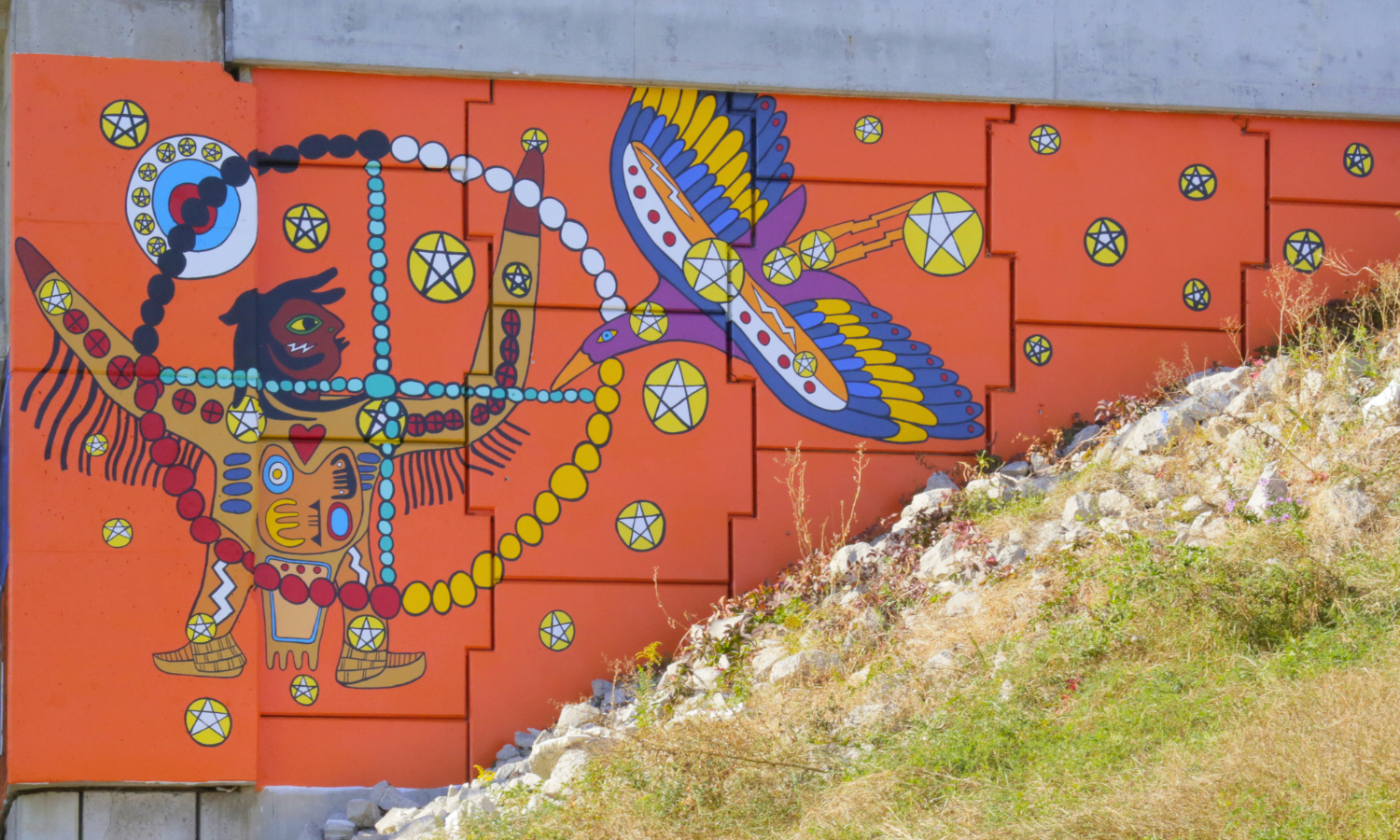
This part of the mural shares Anishinaabe teachings about the stars, changing seasons and the passage of time. A hunter, crane, star patterns and Medicine Wheel come together to illustrate how Indigenous Peoples traditionally observed the sky to guide seasonal activities and maintain a connection to the natural world.
At the centre, the hunter figure is surrounded by circular star patterns representing constellations that were used as seasonal markers in the night sky. The hunter represents the arrival of late autumn and early winter, when communities prepared for the colder months through hunting and gathering food. The placement of stars around the hunter’s body reflects these celestial patterns and their role as a visual calendar marking important times of the year.
Beside the hunter, a crane with blue and yellow wings represents the return of spring and the beginning of seasonal activities such as fishing and maple syrup harvesting. Within Anishinaabe teachings, the appearance of the crane in the sky marks a different phase of the annual cycle and is associated with renewal, abundance and the changing seasons.
The Medicine Wheel is represented by a circular formation of coloured stones surrounding the hunter. It symbolizes the cycle of life, the four directions and the progression of a complete year. The intersecting pathways and spokes mark key points in the seasonal calendar, including the solstices and equinoxes, which helped Indigenous communities track time and organize activities throughout the year.
Stars appear throughout the bright orange background, emphasizing the importance of celestial observation in Indigenous knowledge systems. Together, the hunter, crane, star patterns and Medicine Wheel show how knowledge of the sky helped mark the changing seasons, reflecting the close relationship between the land, the heavens and traditional knowledge passed through generations.